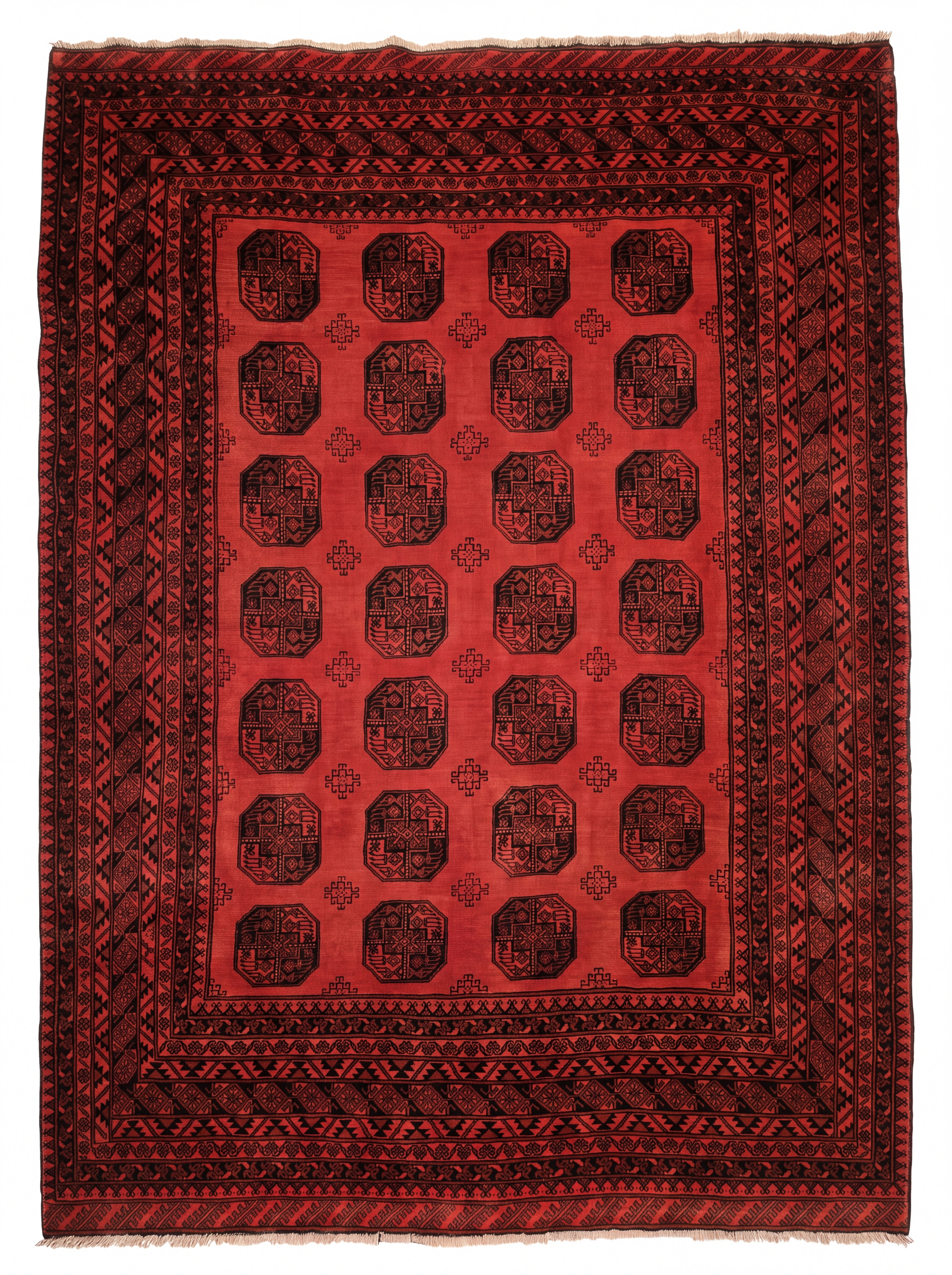
Afghan Bokhara Elephant Foot Red
The Turkmen weaving tradition of northern Afghanistan — practiced by settled and semi-nomadic tribes in regions such as Kunduz, Andkhoy, and Daulatabad — represents one of the most disciplined and symbolically coherent tribal rug-making lineages in Central Asia, prized for its rigorous geometric precision, naturally dyed wool of exceptional lanolin richness, and the deeply saturated red palette derived from madder root.
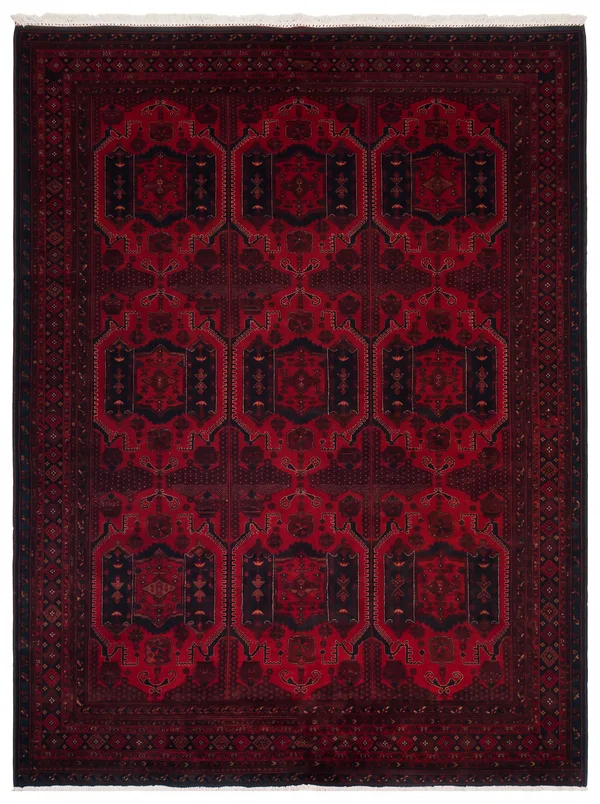
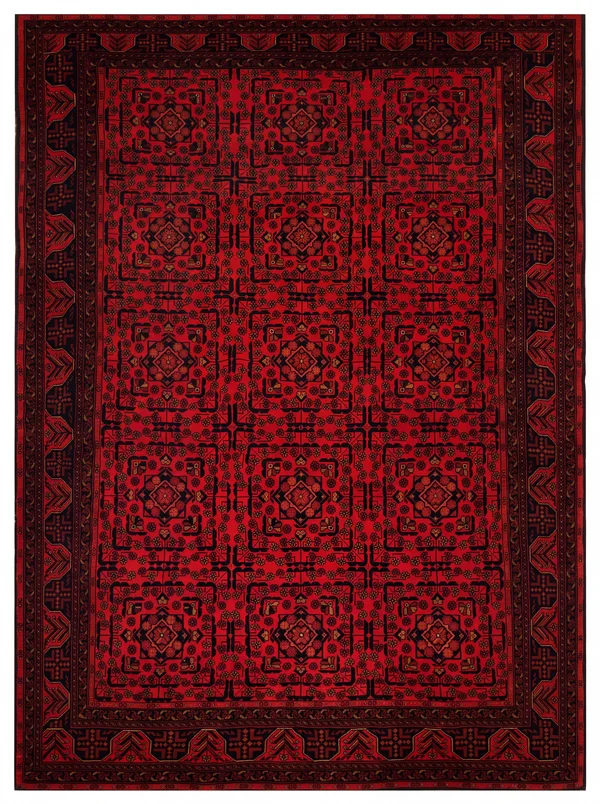
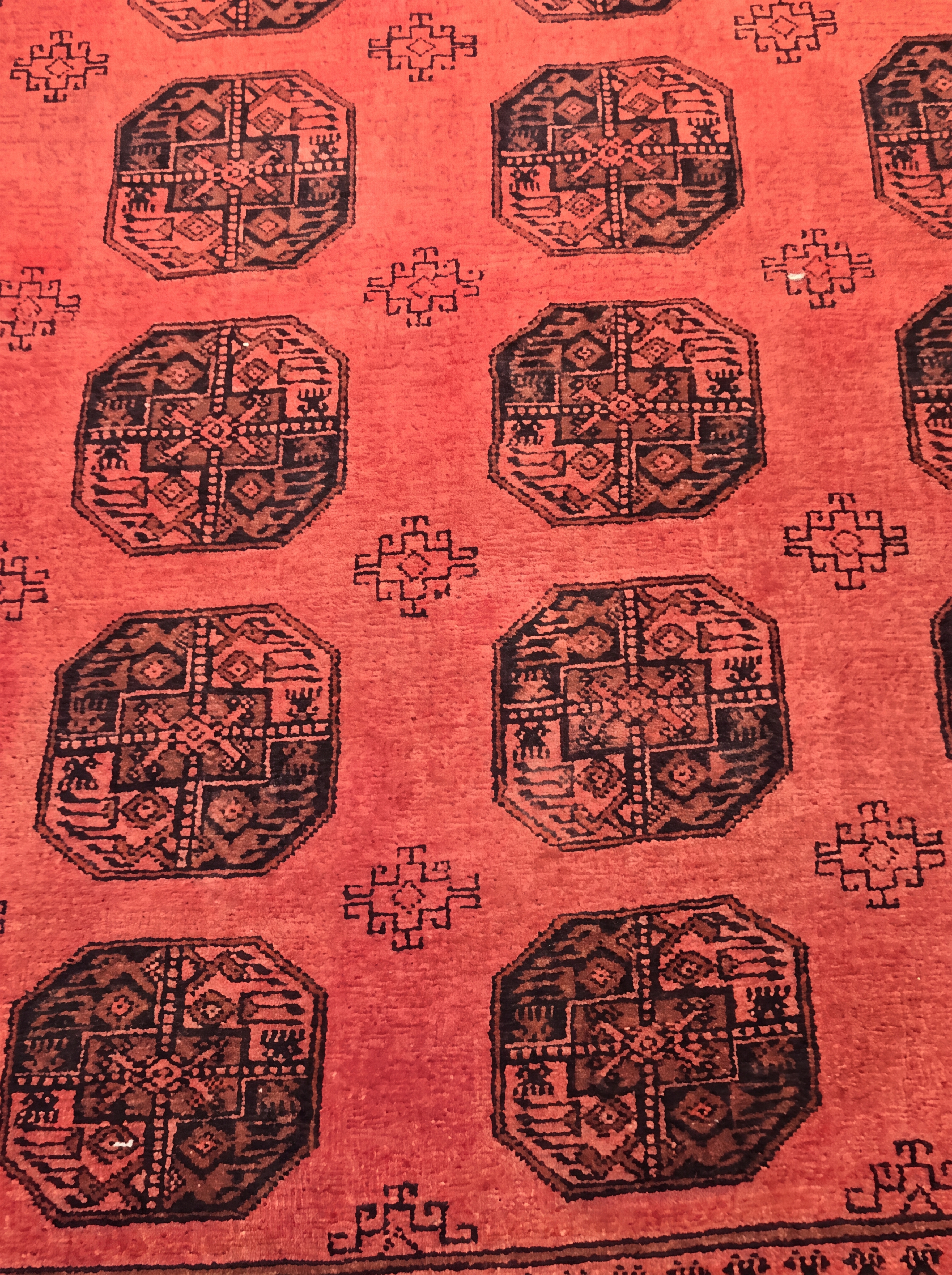
This hand-knotted wool carpet presents a classic fil-pai (elephant foot) composition: twenty large octagonal primary guls arranged in a four-by-five grid across a field of warm madder red, each gul quartered internally by a cross-form structure rendered in deep midnight black and dark burgundy, with small cruciform secondary guls occupying the interstices in the traditional Tekke manner.
The border system is characteristically layered — a dominant reciprocal-triangle main border flanked by narrow trefoil vine guards and a bold stepped outer band — all executed in the same restrained two-tone palette that gives Afghan Bokhara work its graphic intensity. The wool pile carries a visible depth and the dye absorption suggests quality fleece processed with traditional methods, resulting in that characteristic warm-toned red that deepens rather than fades with age. A piece of this character commands a wall or a significant floor with equal authority — austere, rhythmically resolved, and rooted in a weaving vocabulary unchanged across centuries.
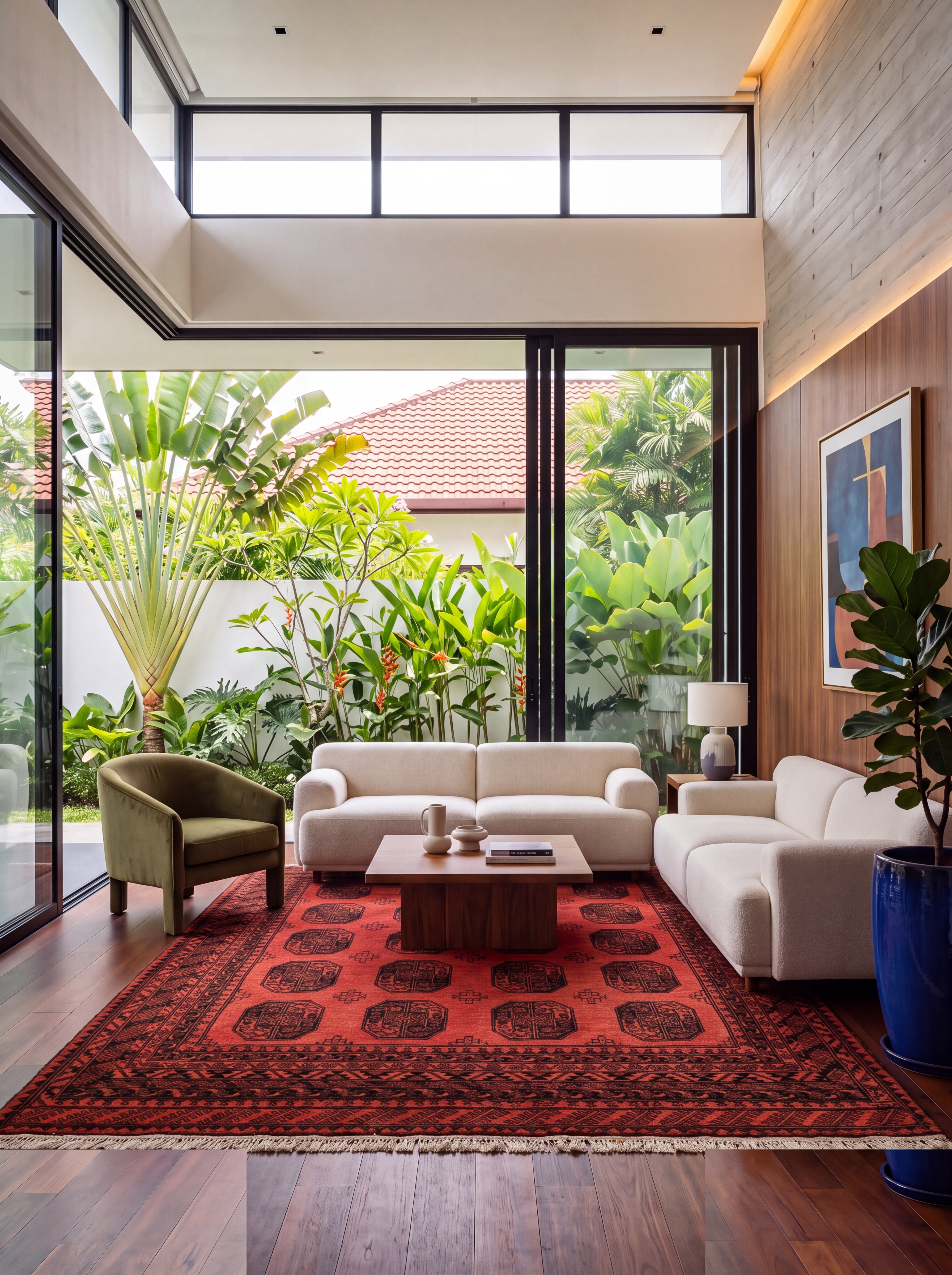
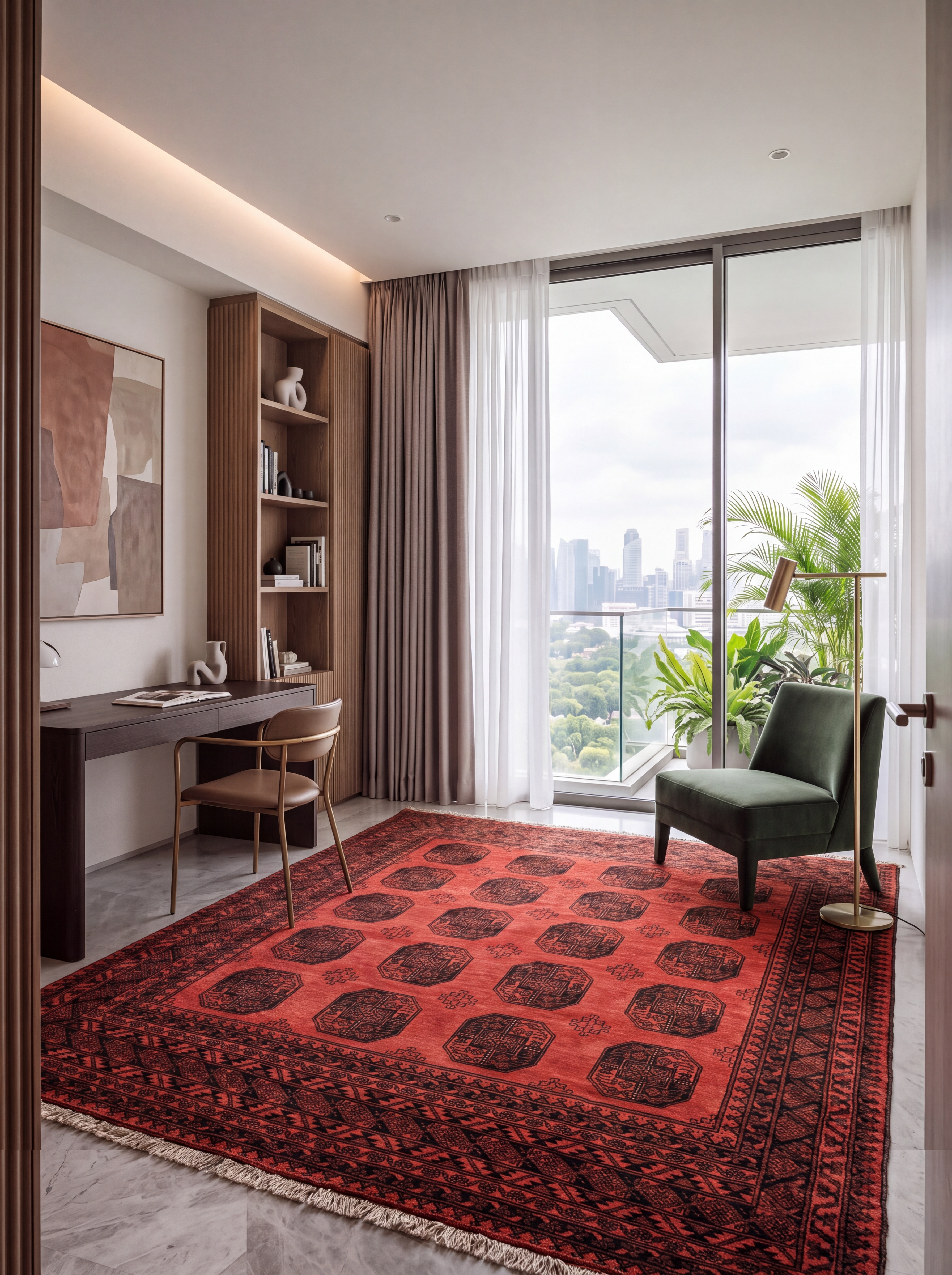
Not sure how this will look in your home? Request a Free Home Trial →