Afghan Khal Mohammadi Compartmental Crimson
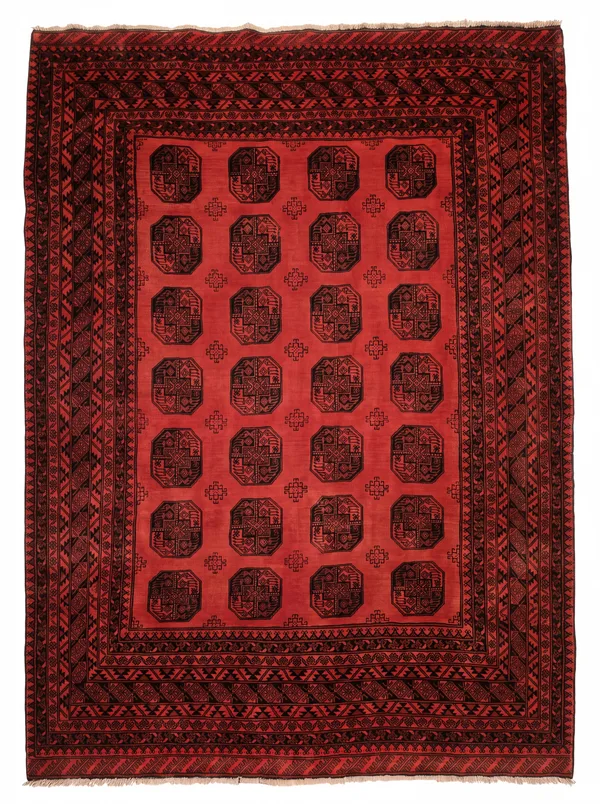
The Khal Mohammadi weaving tradition, rooted in the Turkoman tribal communities of northern Afghanistan's Kunduz and Balkh provinces, represents one of the most disciplined and tonally distinctive branches of Central Asian pile weaving — prized for its saturated madder-based crimson grounds, dense wool pile, and the almost architectural rigour of its repeated gul compositions.
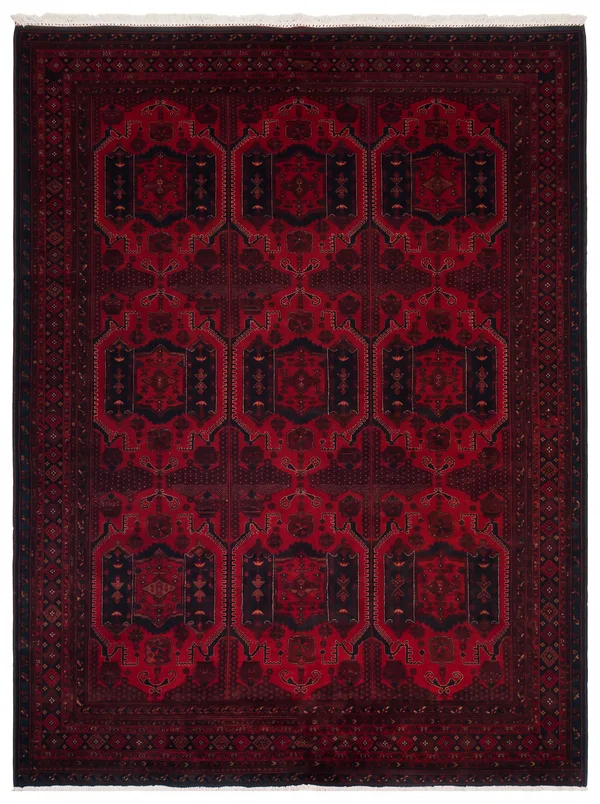
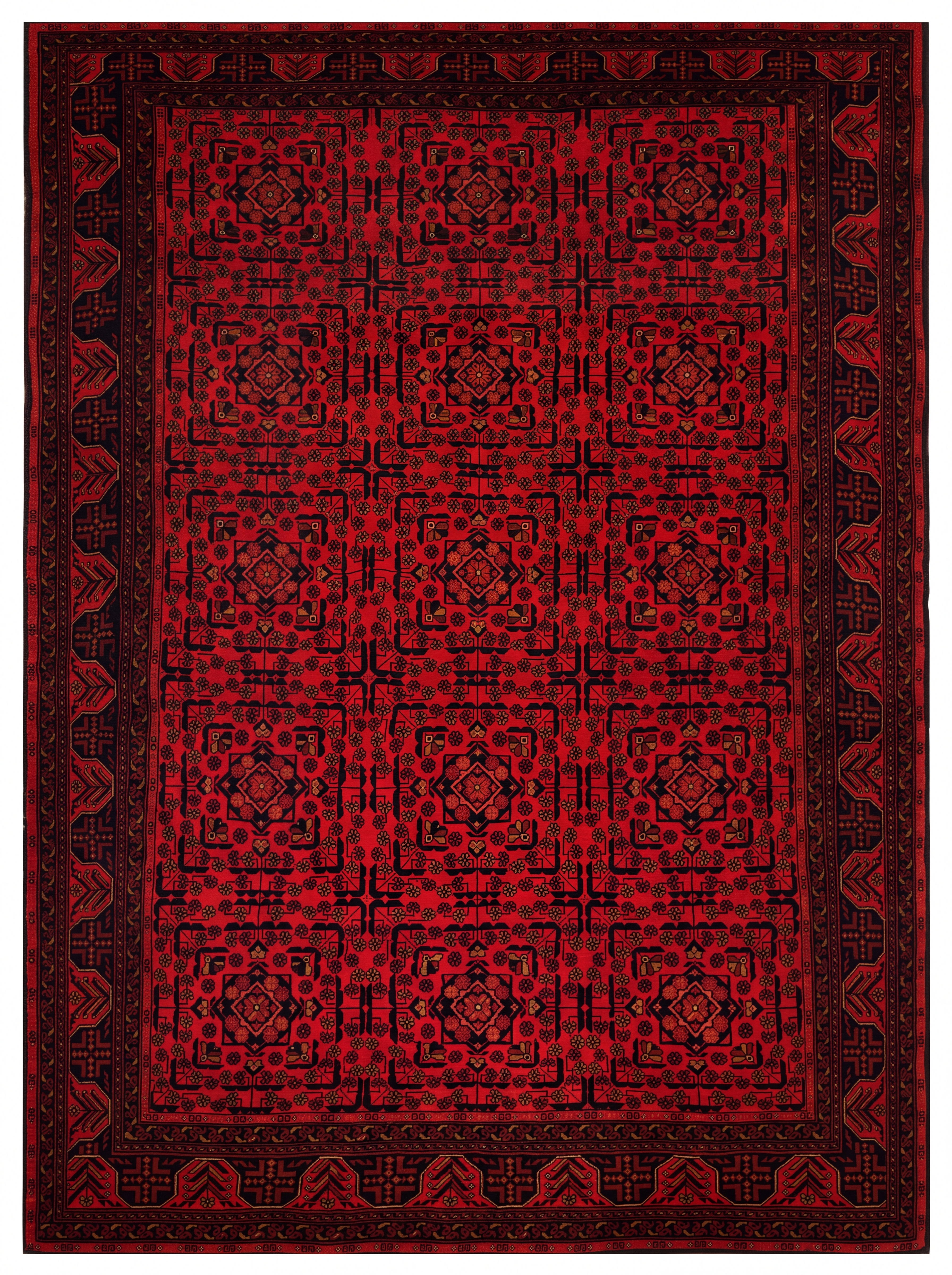
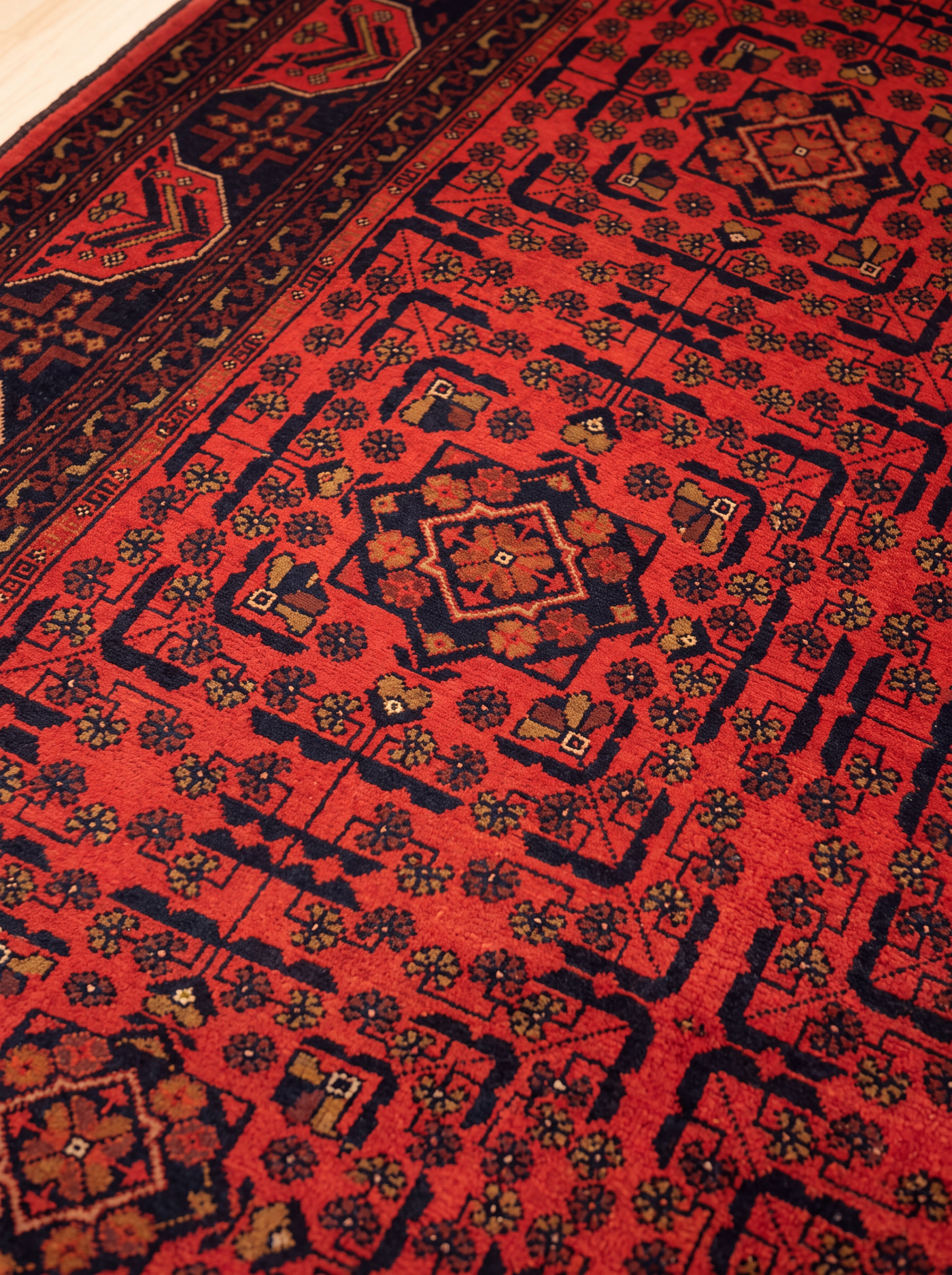
This hand-knotted piece in a generous 207×302 cm format presents a classic all-over compartmental field in which twelve octagonal elephant-foot guls are arranged across three columns and four rows, each medallion rendered in deep midnight navy against the burning crimson ground, their stepped diamond cores accented with blush rose and burnt amber highlights that catch the light with warm luminosity.
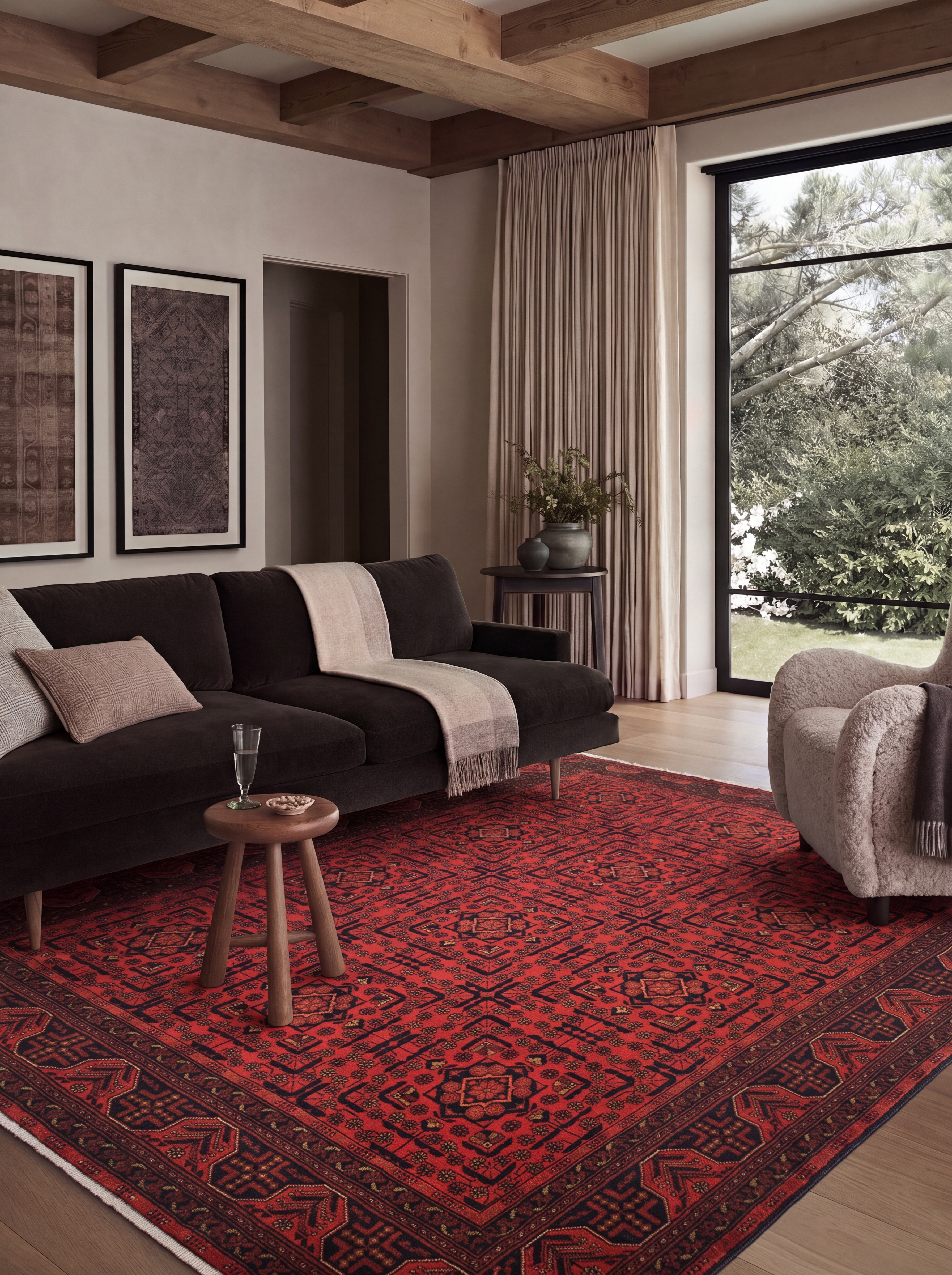
Scattered six-petalled rosettes fill the interstices between the lattice dividers, lending a measured rhythm to the field, while the border system is handled with characteristic Turkoman restraint — narrow reciprocal arrow guards flanking a wide primary navy band anchored by bold stylised arch or tree motifs at each cardinal axis. The wool is lustrous and tightly knotted, the palette uncompromisingly tribal in its reliance on natural dye tones, and the overall hand notably even. A piece of this temper commands a room with quiet authority, equally at home in a collector's interior as in a considered contemporary space that demands grounded, ancestral weight.
Not sure how this will look in your home? Request a Free Home Trial →