Rug History
The Art of Natural Dyeing: Why Handmade Colours Last Centuries
The colours in a 400-year-old Persian rug are still vibrant. Synthetic dyes from the 1960s have already faded. Here's the ancient science behind colours that only improve with age.
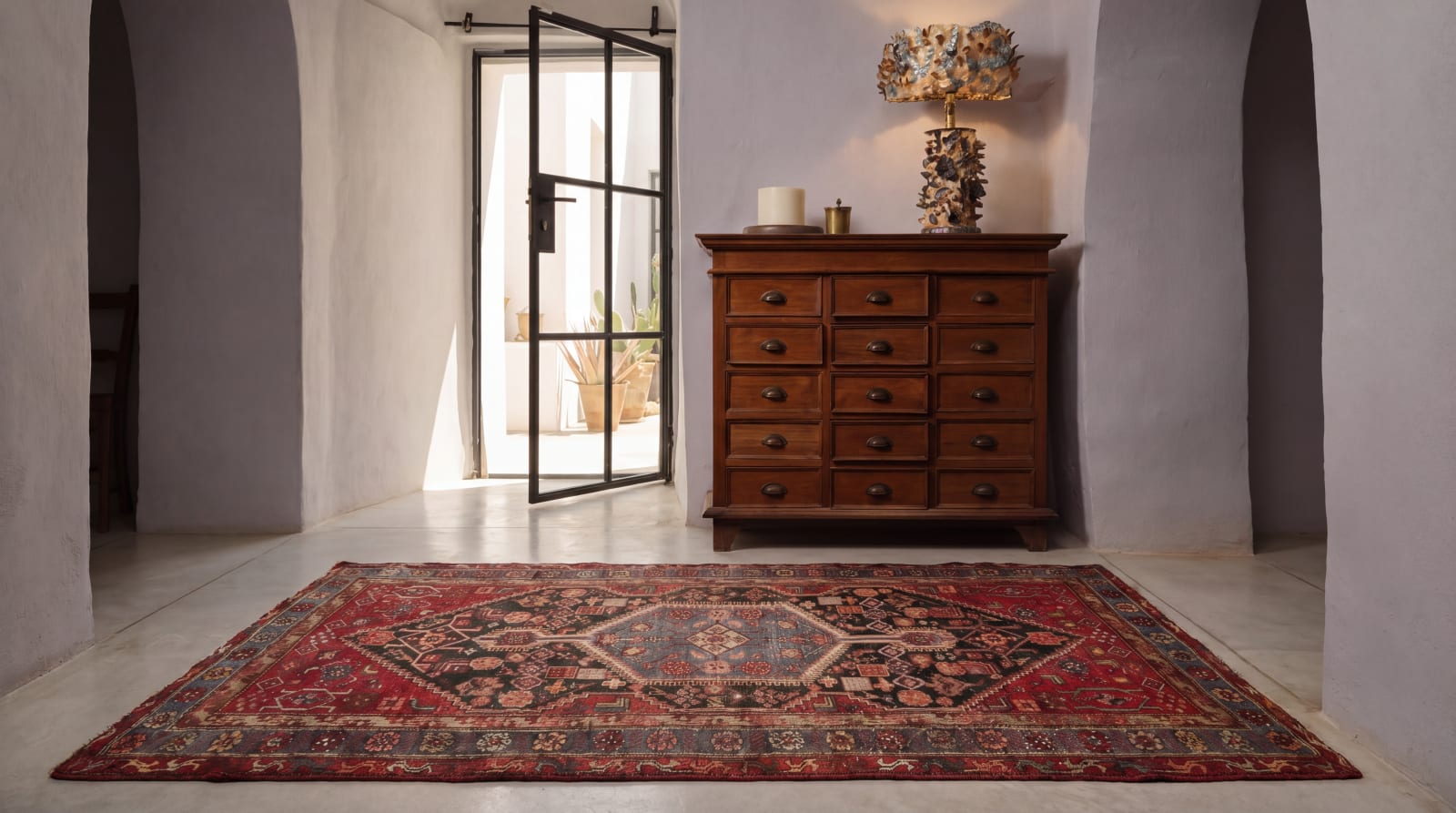
Walk through any museum with a textile collection and you will notice something remarkable: the oldest rugs often have the most luminous colours. A 16th-century Safavid carpet with indigo so deep it seems to glow from within. A 400-year-old Anatolian kilim with madder reds that have mellowed into a warm terracotta but lost none of their richness.
Now look at a rug made in the 1960s or 1970s with early synthetic dyes. The blues have gone grey. The reds have turned pink. The greens have faded to a muddy olive.
The difference is not age. It is chemistry.
The Dyer's Palette
For thousands of years, the same handful of natural sources have provided the entire colour vocabulary of the rug-weaving world:
The Mordant Process
Natural dyes do not simply stain wool — they bond with it at a molecular level, and this bond is what makes them permanent.
The secret is the mordant: a metallic salt that acts as a chemical bridge between the dye molecule and the wool fibre. The most common mordants in traditional rug-making are:
The mordant is applied to the wool before dyeing. The wool is soaked in a mordant solution for hours, sometimes days, then rinsed and submerged in the dye bath. The mordant molecules attach to the wool's protein structure, then attract and lock the dye molecules into place. The result is a colour that is literally part of the fibre — not sitting on its surface.
Abrash: The Beauty of Imperfection
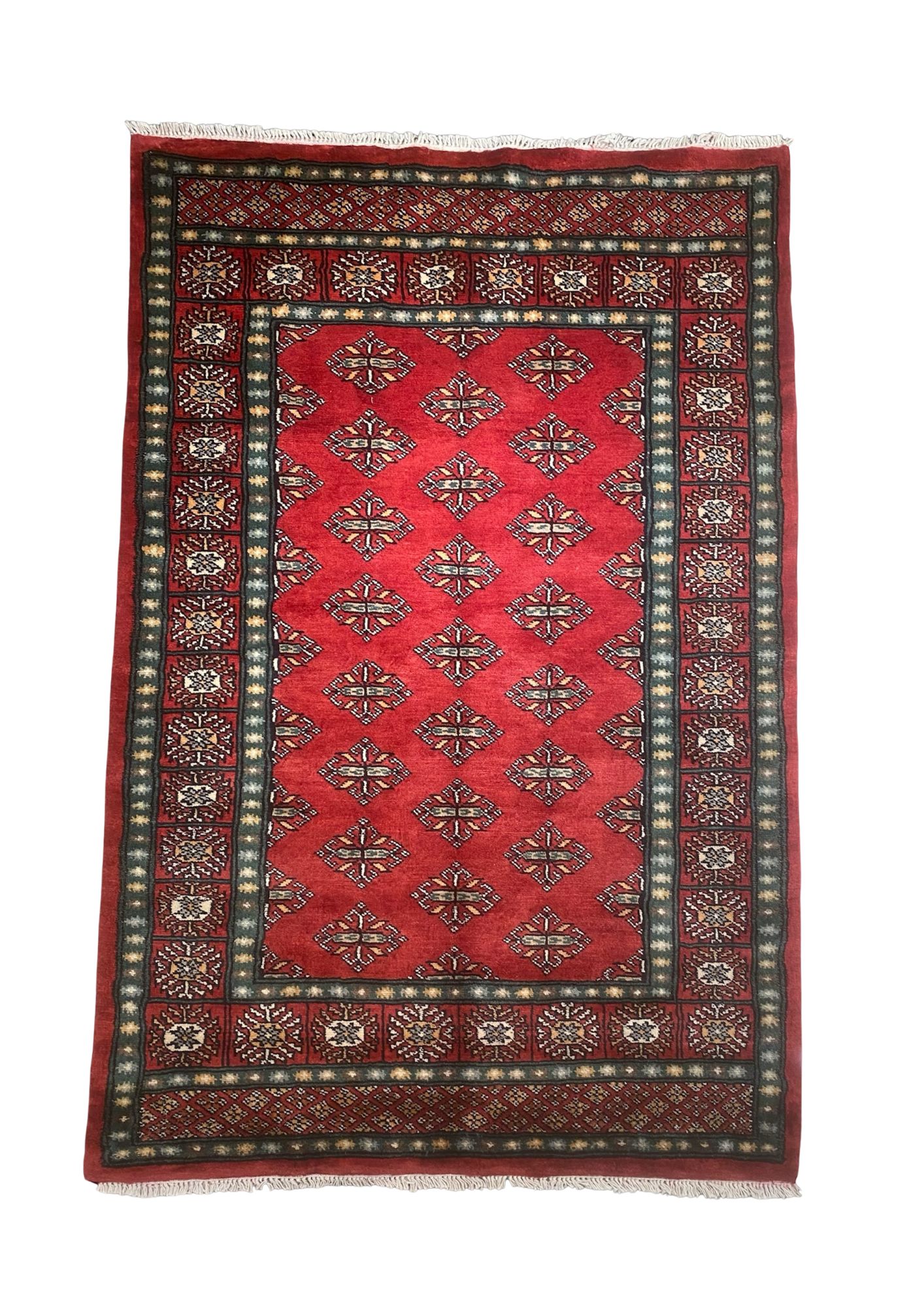
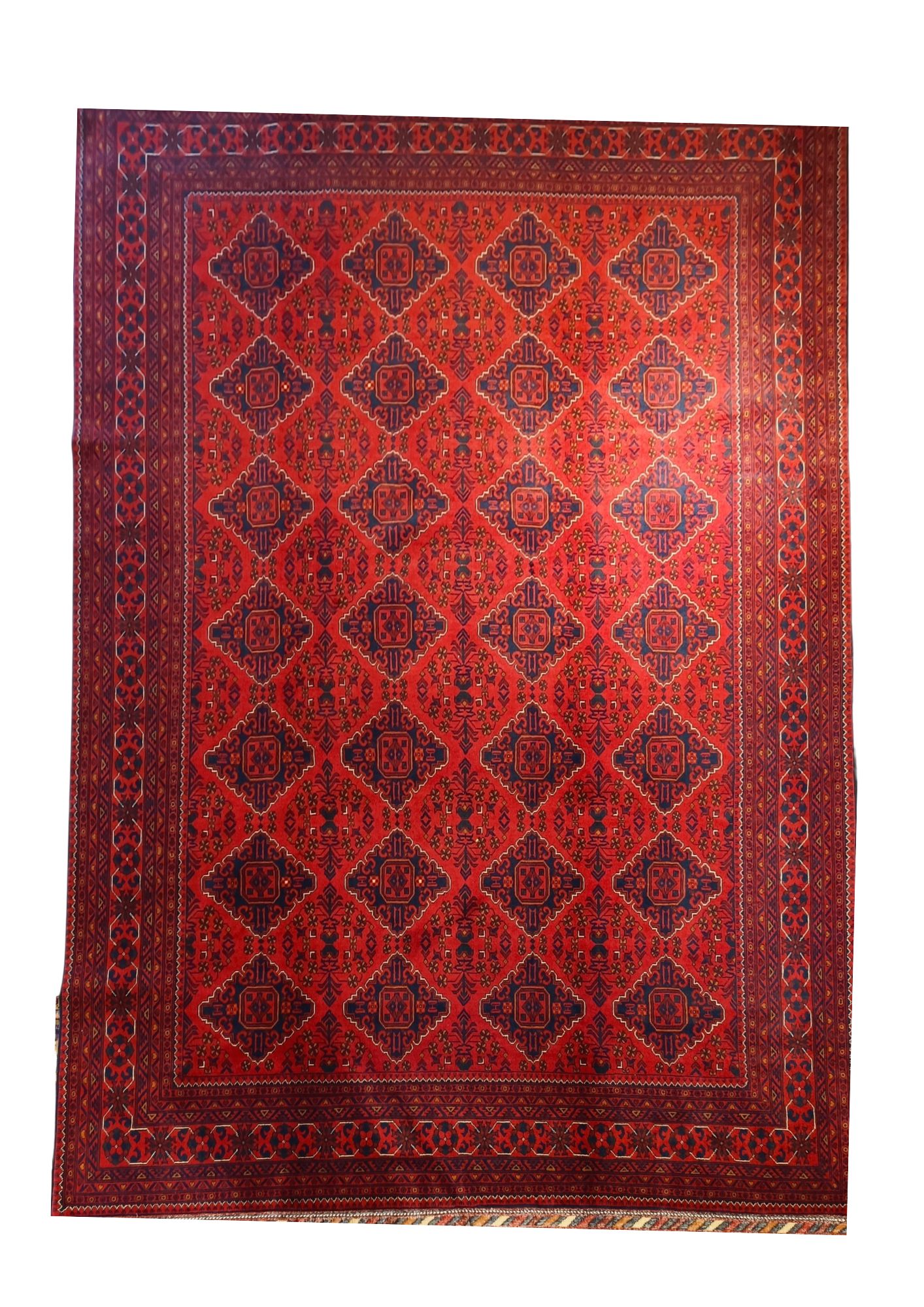
If you look closely at a naturally dyed rug, you will notice subtle variations in colour within what should be a single hue. The blue field may shift slightly from one end to the other. A red border may be a shade warmer in one corner. This is called abrash, and it is one of the most prized characteristics of handmade rugs.
Abrash occurs because natural dyeing is inherently variable. Each dye batch is slightly different — the concentration of the mordant, the temperature of the water, the maturity of the plant, even the mineral content of the local water supply. When a weaver exhausts one batch and begins another, the new yarn carries a subtly different shade.
Far from being a flaw, abrash is the signature of authenticity. It creates a living, breathing surface that changes in different light — a quality that no machine-dyed, perfectly uniform rug can replicate.
Buyer's tip: If a rug's colours are absolutely uniform from edge to edge with no variation whatsoever, it was almost certainly dyed with synthetics — regardless of what the seller claims.
Freshly dyed wool drying in the sun — a tradition unchanged for centuries
Natural vs. Synthetic: How to Tell
The market is full of rugs labelled "vegetable dyed" or "natural dyes" that are nothing of the sort. Here are four ways to verify:
1. Look for abrash — Subtle colour variations within a single hue are the clearest sign of natural dyes. Perfectly uniform colours suggest synthetics.
2. Check the back — Part the pile and look at the base of the knots. Natural dyes penetrate deeply and evenly. Synthetic dyes often appear brighter on the surface and paler at the base.
3. The light test — View the rug from multiple angles in natural daylight. Naturally dyed colours shift temperature — they look warmer from one direction and cooler from another. Synthetic dyes look identical from every angle.
4. The age test — If the rug is marketed as antique or vintage, natural dyes should have mellowed beautifully. If the colours are still screaming, they're synthetic. Natural dyes age like fine wine — synthetics age like fast fashion.
The Opposite of Fast Furniture
In an age of disposable goods and planned obsolescence, a naturally dyed handmade rug is a radical act of permanence. It is an object designed to outlive you — and to look better doing it.
Every year that passes, the colours deepen. Every footstep burnishes the wool. Every ray of sunlight adds another layer of patina. The rug you buy today will be more beautiful in twenty years than it is now.
That is the promise of natural dyes — and it is a promise that has been kept for thousands of years.
More from the Journal