Rug History
The Royal Legacy of Tabriz Rugs
For six centuries, the city of Tabriz has produced the world's most revered carpets. From Safavid courts to modern collectors — the story behind the rug capital of Iran.
In the northwest corner of Iran, at the foot of the Sahand volcano, lies a city that has shaped the global understanding of what a carpet can be. Tabriz is not simply a rug-producing region — it is the intellectual and artistic epicentre of Persian weaving, a city where the craft of carpet-making was elevated from trade to fine art.
The Tabriz Bazaar, one of the oldest covered marketplaces in the world and a UNESCO World Heritage Site since 2010, has been the beating heart of the carpet trade for over 600 years. To understand Persian rugs, you must first understand Tabriz.
A City Built on Silk
Tabriz's position on the Silk Road made it a natural crossroads of commerce and culture. By the 15th century, under the patronage of the Safavid dynasty (1501-1736), carpet weaving was transformed from a domestic craft into a state-sponsored art form. Shah Tahmasp I established royal workshops — *karkhanehs* — employing the finest designers, dyers, and weavers under a single roof.
These workshops produced the carpets that now hang in the Victoria and Albert Museum, the Metropolitan Museum of Art, and the Louvre. They were diplomatic gifts, traded between empires, and their designs influenced weaving traditions from Mughal India to Ottoman Turkey.
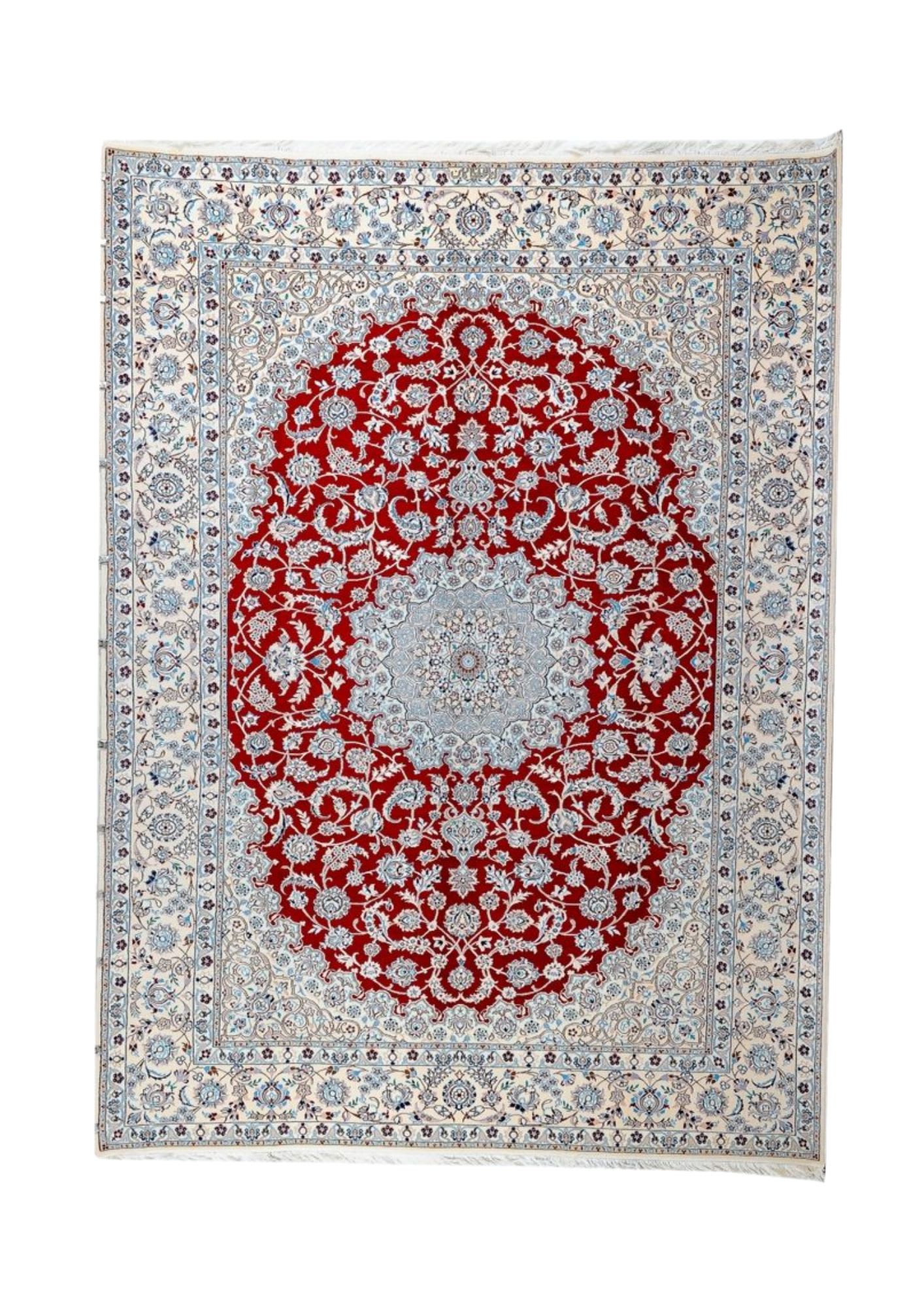
The Safavid period established the design vocabulary that still defines Tabriz weaving today: the central medallion, the elaborate corner spandrels, and the densely packed floral field that seems to contain an entire garden within its borders.
Anatomy of a Tabriz
A Tabriz rug is identifiable by several distinctive features:
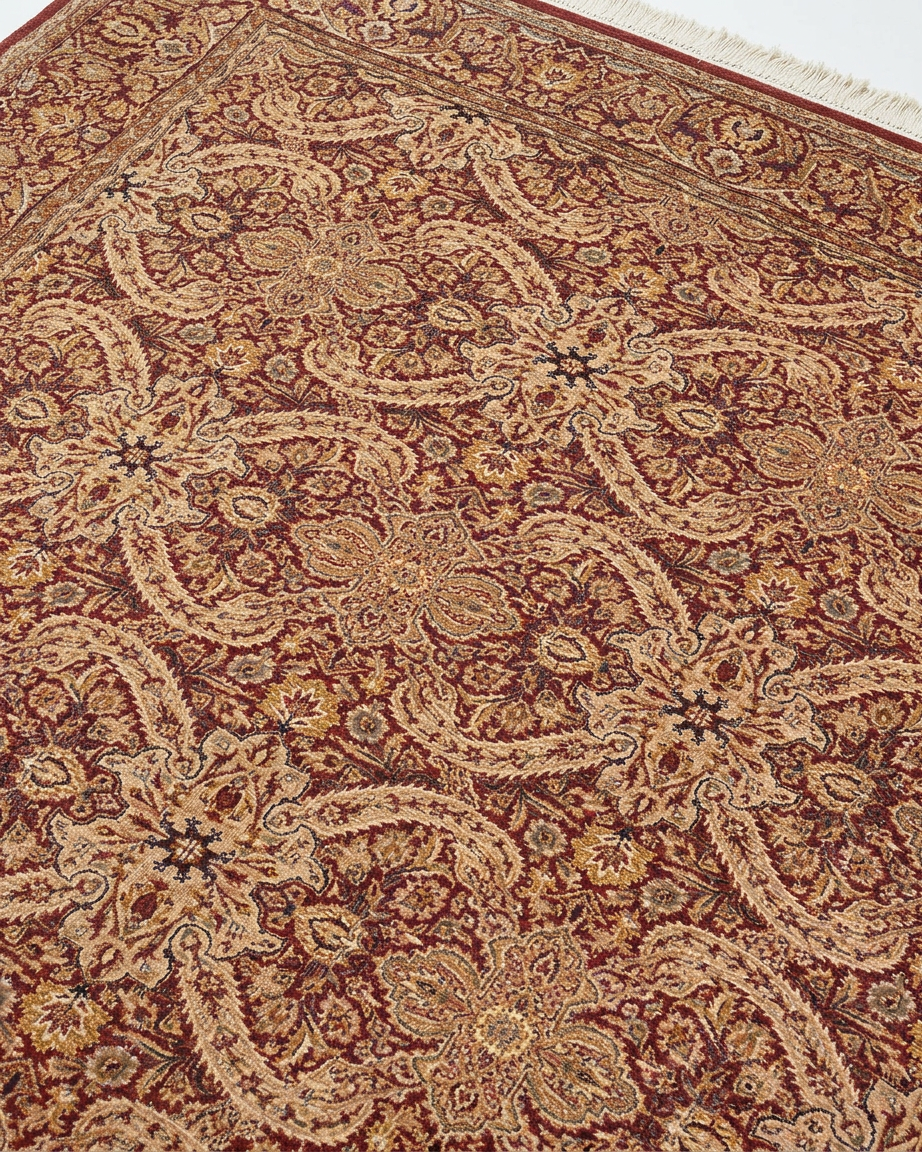
The Mahi (Fish) Design — Perhaps the most iconic Tabriz pattern, the Herati or *mahi* motif features a diamond with curved leaves resembling fish. Repeated across the field, it creates a mesmerising rhythm that rewards close inspection.
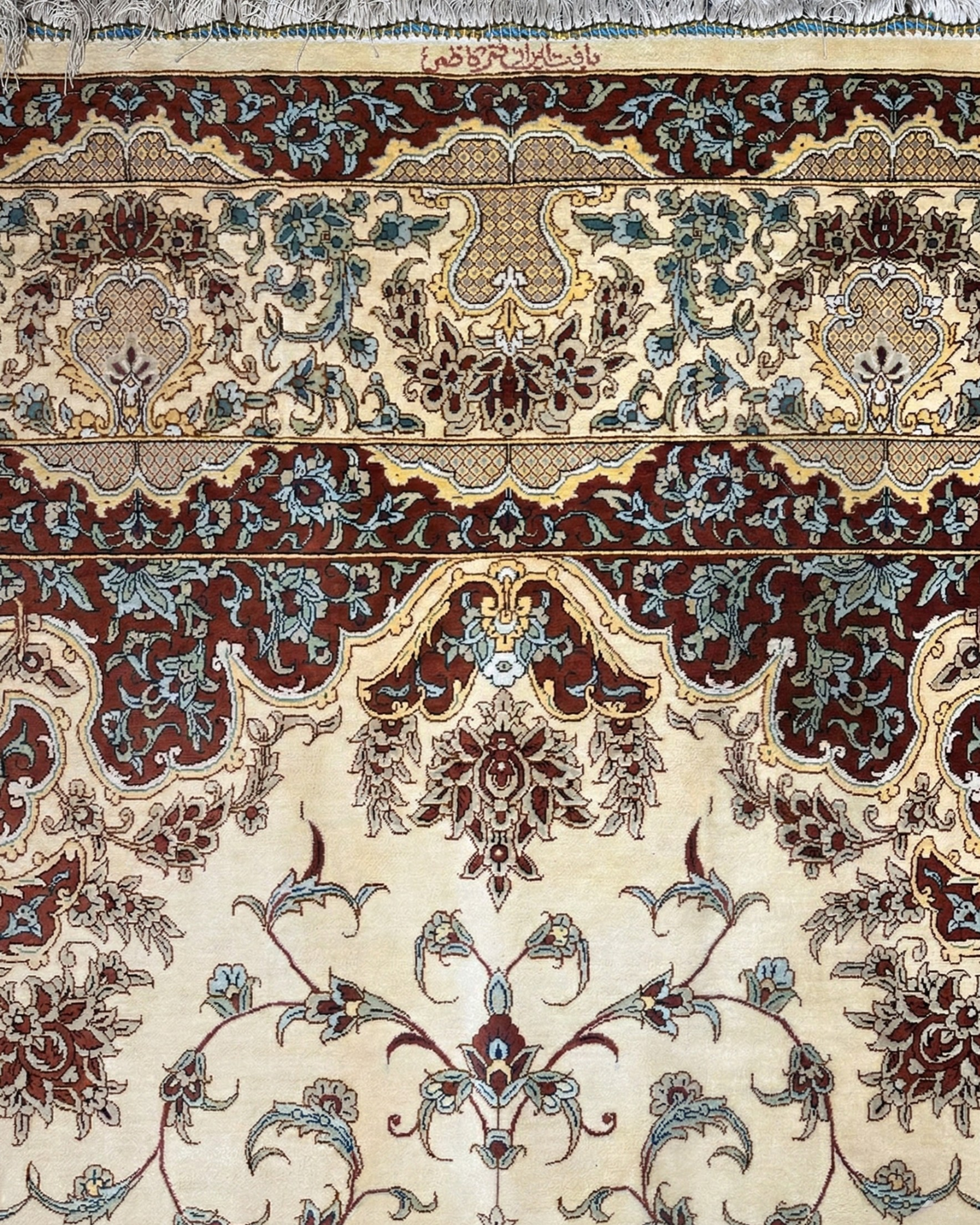
Medallion Layouts — The classic Tabriz features a central medallion — often an elaborate sixteen-pointed star or oval — surrounded by a field of arabesques, palmettes, and vine scrolls. The corners typically contain quarter-medallions that, when mirrored, complete the larger design.
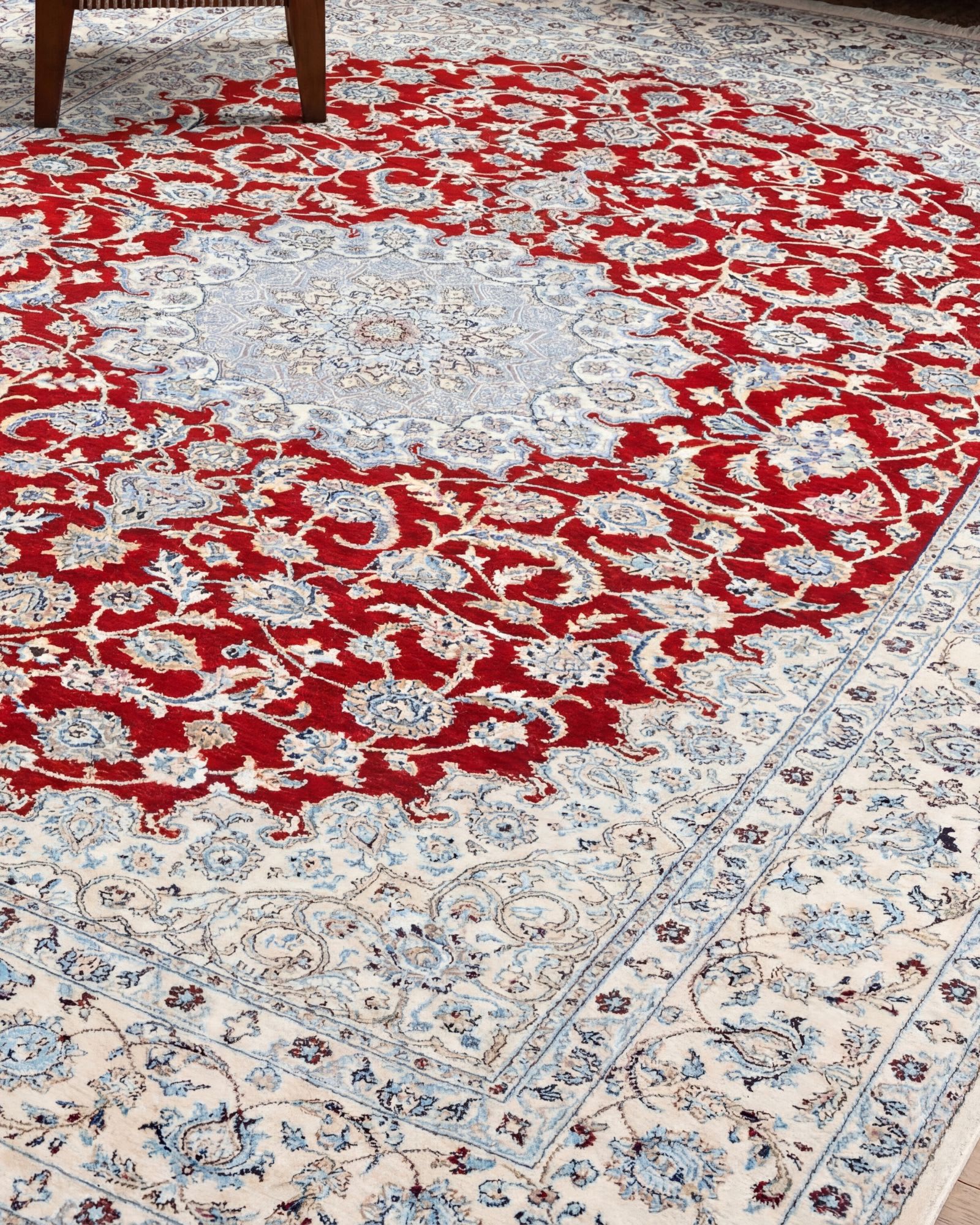
Curvilinear Drawing — Unlike the geometric, rectilinear designs of tribal rugs, Tabriz carpets feature flowing, curved lines. This requires a much higher knot density to execute without visible stair-stepping — which is why Tabriz rugs are among the most finely knotted in the world.
The Wagireh (Sampler) — Unique to Tabriz, a *wagireh* is a small sample rug woven as a reference for the full-size carpet. It contains fragments of the border, field, and medallion — a kind of blueprint in wool and silk.
Grading Tabriz Rugs
Tabriz rugs are graded by the *raj* system — a measurement of knot density counted over a 7cm length of the warp. The scale is straightforward:
But *raj* alone does not determine quality. A 50-raj Tabriz with exceptional wool, natural dyes, and a master weaver's touch will outperform a 70-raj piece with synthetic materials and rushed execution. Always judge with your hands as much as your eyes.
The raw materials behind every Tabriz masterpiece — wool, silk, and natural dyes
Collecting Tabriz Today
The market for Tabriz rugs has shifted dramatically in the last two decades. International sanctions, rising production costs, and a declining number of master weavers have made new, high-quality Tabriz carpets increasingly scarce. The finest pieces from the 1970s and 1980s — often called the "last golden age" of Persian weaving — are now appreciating at 5-8% annually.
What to look for:
Modern reproductions from Pakistan and India (often labelled "Pak-Persian" or "Indo-Tabriz") can be excellent values, but they are a different tradition. They honour the Tabriz vocabulary without the Tabriz heritage — and their prices reflect this distinction.
Why a Tabriz Belongs in Every Collection
A Tabriz is not simply a rug. It is a compressed garden — a portable paradise designed to bring the order and beauty of nature into any room it enters. The Persians called it *firdaus*, the walled garden, and that is precisely what a great Tabriz creates: a world within a world, contained within four borders.
Whether you are starting a collection or adding to one, a Tabriz is the foundation. It is the rug against which all others are measured — and the one your grandchildren will fight over.
More from the Journal